
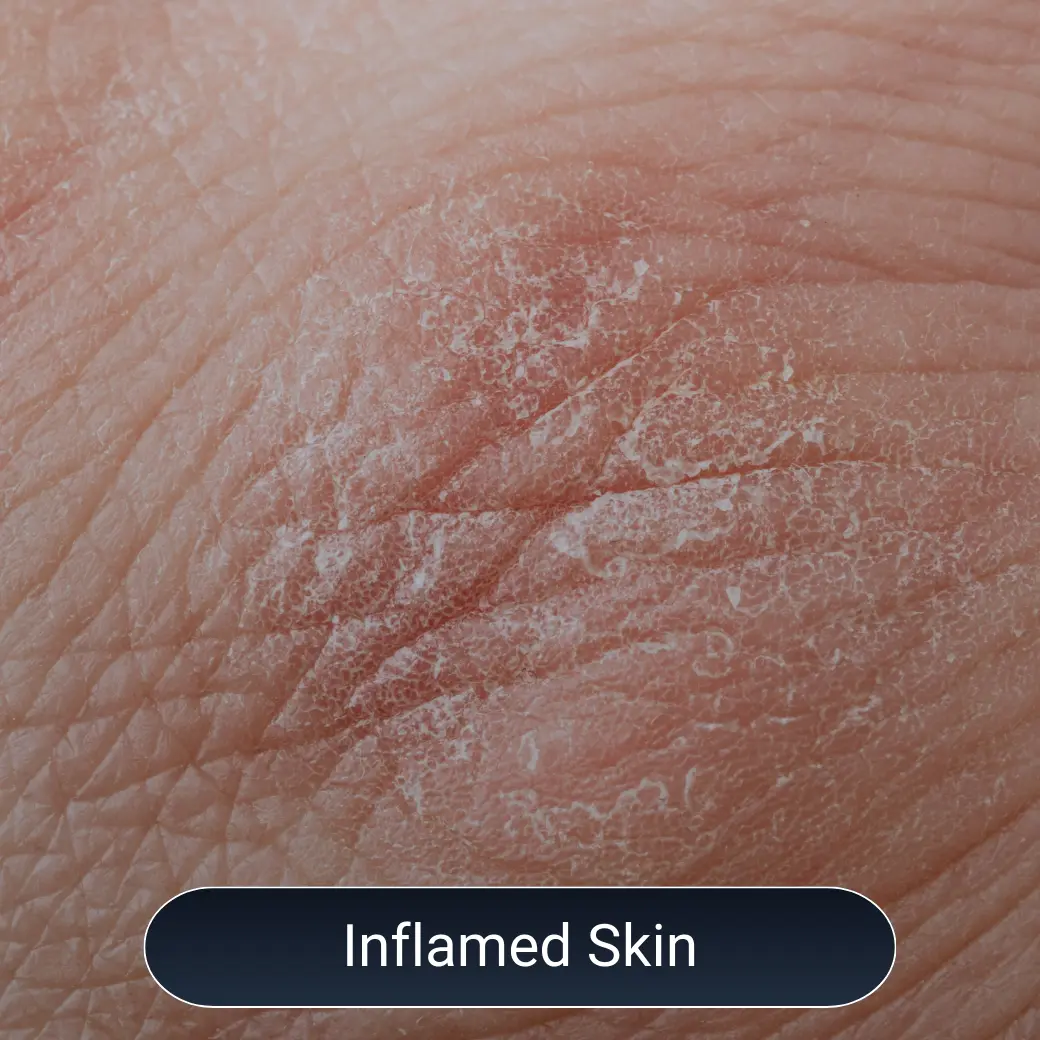
Skin inflammation is a common issue that can occur in any skin type, whether normal, oily, or sensitive. It often begins with redness, burning, itching, or increased sensitivity, which can be uncomfortable and make it difficult to know how to care for the skin properly.
Understanding the causes, symptoms, and the right initial care is essential because early management helps prevent worsening and supports faster recovery. This article explains inflamed skin in a clear, practical way and provides guidance on early care and signs that indicate you should consult a doctor.
Inflamed skin is a condition where the skin reacts to irritation or external triggers, leading to redness, stinging, itching, or a warm sensation. It is the skin’s natural defense response when the protective barrier becomes weakened or overly stressed by irritants.
This condition can appear suddenly or develop gradually from using products that do not suit the skin. While generally not dangerous, untreated inflammation may worsen or become recurrent in sensitive or vulnerable skin types.
Inflamed skin often begins with redness, itching, or a stinging sensation, showing that the skin is reacting to irritation or external stress.
Some people may experience tightness, warmth, or flaky patches, especially around the cheeks, forehead, or nose.
The severity varies depending on the trigger and skin condition, and untreated irritation can spread or recur easily.
Individuals with sensitive skin tend to react more noticeably to pollution, dry air, unsuitable skincare, or friction on the skin.
Inflamed skin often stems from a weakened skin barrier that can no longer protect against irritants, leading to redness, stinging, or itching. Common triggers include strong skincare ingredients such as acids, fragrances, or alcohol, which disrupt moisture balance and increase sensitivity.
Environmental changes, stress, and lack of rest can also heighten the skin’s reactivity and worsen inflammation over time. In some cases, improper pimple extraction or repeated friction on the skin may create micro-injuries that develop into ongoing inflammation.
During inflammation, the priority is to minimize irritation and support the skin barrier so it can recover naturally. Start by pausing active skincare products such as acids, fragrances, or anything that may intensify sensitivity, keeping your routine as simple as possible.
Cool compresses can help reduce redness and tightness, while a lightweight moisturizer restores hydration and comfort to the skin. Avoid exfoliating, picking, excessive sun exposure, or intense workouts, as heat and friction may prolong or worsen inflammation.
You should see a doctor if inflammation does not improve within 2–3 days, or if redness spreads, burning intensifies, or the skin becomes painful to touch. Signs such as oozing, wide red patches, or unusually reactive skin after using skincare products indicate a possible allergic response that needs evaluation.
If inflammation occurs after a treatment or laser session and feels more severe than expected, a prompt medical check is recommended. Proper diagnosis helps determine the right approach, speeds up recovery, and prevents recurring inflammation in the future.
Treatment begins with identifying the root cause, distinguishing whether the inflammation is due to irritation, allergies, or a weakened barrier. Doctors typically recommend gentle, restorative products that reduce inflammation while replenishing moisture and supporting barrier repair.
In some cases, targeted treatments may be suggested to reduce redness or enhance skin recovery without adding further irritation. Consistent monitoring and personalized adjustments help prevent recurring inflammation and support long-term skin resilience.
Inflamed skin usually comes from irritation or a weakened barrier, creating temporary redness, stinging, or sensitivity. These symptoms often improve once triggers are removed and the skin is cared for gently.
Steroid-damaged or substance-sensitized skin results from harsh or inappropriate products that thin the skin and disrupt its balance. It typically shows extreme redness, frequent flare-ups, and lingering sensitivity that may persist even after discontinuing the product.
Most mild inflammation improves within 2–5 days with proper care and removal of triggers. If redness spreads or the skin becomes highly reactive, medical evaluation may be needed.
Choose gentle, hydrating products with barrier-supporting ingredients like ceramides. Avoid acids, fragrances, and alcohol during inflammation to prevent further irritation.
Light makeup is acceptable if the skin is not severely red or painful, but cleansing must be gentle. If inflammation is obvious, skipping makeup temporarily can support faster recovery.
Yes. Both stress and insufficient rest can weaken the skin barrier and increase sensitivity. This makes redness, itching, and flare-ups more likely, especially in sensitive skin types.
Stop using the product immediately and switch to a mild cleanser and soothing moisturizer. If redness spreads or the skin reacts intensely, a doctor should assess for possible sensitization or barrier damage.
Mild redness or heat is common, but symptoms usually improve quickly. If inflammation persists, becomes painful, or shows oozing, medical assessment is recommended.
Focus on hydration and avoid any exfoliation to prevent worsening irritation. Barrier-repair moisturizers can help reduce flakiness more effectively.
Not usually dangerous, but it indicates that the skin barrier is compromised or triggers remain unaddressed. Identifying the root cause helps prevent repeated flare-ups.
Inflamed skin can recover well when the triggers are identified early and proper care is given, especially by minimizing irritation and restoring moisture to the barrier. Recognizing symptoms clearly helps you choose the right approach and reduces the chance of recurring inflammation.
If symptoms worsen, spread, or do not improve within a few days, a medical evaluation is recommended to ensure accurate diagnosis and appropriate treatment. With the right care plan, the skin can regain strength, balance, and resilience more effectively.


