
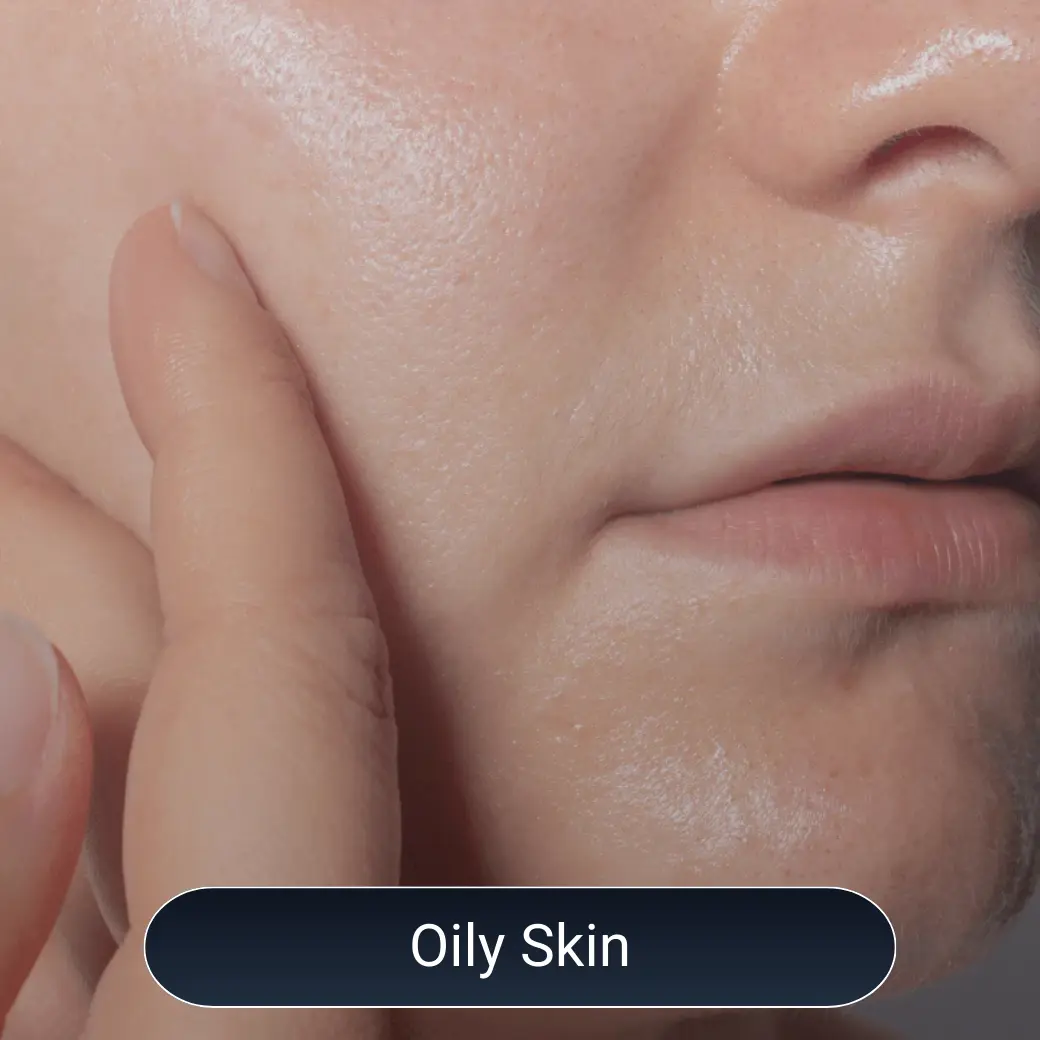
If your skin becomes shiny during the day, makeup does not last, and breakouts keep recurring, you may wonder whether this is normal.
The skin naturally produces oil to protect itself, but excessive shine can indicate an imbalance in overall skin condition.
Understanding the underlying cause allows you to choose the right approach, whether adjusting your skincare habits or seeking professional evaluation.
This article explains what level of oil production is considered normal and when it may require closer attention.
Oily skin results from the activity of sebaceous glands that produce sebum, the skin’s natural oil. In appropriate amounts, sebum helps protect the skin and reduce moisture loss.
Hormonal stimulation—especially from androgens—can increase gland activity, leading to visible shine and a higher risk of clogged pores.
Other contributing factors include genetics, stress, humid climates, and using skincare products that are not suited to your skin type.
In some cases, skin that appears oily may actually be dehydrated. When the skin barrier is imbalanced, the body may compensate by producing more oil.
Sebaceous glands are small structures located beneath the skin and connected to hair follicles. They produce sebum, which naturally coats and protects the skin.
Sebum travels through the pores to the skin surface, helping maintain moisture and reduce water loss.
Their activity is influenced by hormones and internal factors, which explains why oil levels vary between individuals.
When overstimulated, these glands produce more sebum, leading to increased shine and a higher risk of clogged pores.
Hormones, particularly androgens, play a major role in stimulating sebaceous gland activity. Oil production may increase during certain life stages or hormonal shifts.
Stress, lack of sleep, and hot, humid climates can further enhance gland activity.
Using unsuitable skincare products or cleansing too frequently may disrupt skin balance and stimulate additional oil production.
Genetic predisposition can also influence baseline sebum levels in some individuals.
Mild oiliness during the day—especially in the T-zone—is generally normal.
However, if the skin becomes excessively oily from early morning or remains greasy without heat exposure, it may exceed typical levels.
When excess shine is accompanied by recurring breakouts or uneven skin texture, it may indicate increased sebum production.
Observing associated symptoms helps determine whether the oil level falls within a normal range.
Proper skincare can help manage excess oil without disrupting the skin’s natural balance.
The main goal is to reduce triggers of sebaceous gland activity while maintaining hydration and barrier strength.
Product selection and routines should match the actual skin condition rather than focusing on excessive drying.
Correct foundational habits can help minimize oil buildup throughout the day.
Cleanse twice daily, in the morning and before bedtime, using a gentle formula suitable for oily skin.
Over-cleansing may strip moisture and stimulate increased sebum production.
Avoid harsh scrubbing, as it can damage the skin barrier and increase sensitivity.
Use lukewarm water instead of hot water to maintain skin balance.
Yes. Even oily skin requires hydration. When the skin is dehydrated, it may compensate by producing more oil.
Choose a lightweight, non-comedogenic formula that absorbs easily.
Proper hydration supports the function of the skin barrier.
Selecting suitable products plays a key role in long-term oil management.
When basic care is not sufficient, a medical evaluation allows for a more detailed assessment of oil levels and contributing factors.
Medical approaches focus on regulating sebaceous gland activity and supporting overall skin structure rather than providing temporary surface control.
Treatment selection depends on individual skin condition, severity, and personal goals.
Personalized assessment helps ensure safety and appropriate planning.
Microbotox involves superficial injections designed to reduce sebaceous gland activity.
This approach may decrease excess shine and improve the appearance of enlarged pores.
It may be suitable for individuals with oily skin accompanied by clogged pores.
A professional evaluation is necessary to determine suitability and dosage.
Radiofrequency (RF) or microneedling RF uses controlled thermal energy to stimulate skin structure.
This technology may help balance oil production while supporting skin firmness.
It is often considered for individuals with oiliness combined with enlarged pores or uneven texture.
Professional assessment helps determine appropriate energy levels and treatment sessions.
In some individuals, excess oil may be associated with dehydration or a weakened skin barrier.
Skin quality programs aim to strengthen the skin structure and restore overall balance.
As hydration and barrier function improve, oil levels may gradually stabilize.
This approach is suitable for those seeking comprehensive skin optimization.
Self-care is suitable for individuals with mild to moderate oiliness and no severe inflammatory acne.
This approach focuses on selecting appropriate skincare products and maintaining consistent routines.
If excess oil persists or related concerns continue to recur, medical treatment may offer a more targeted approach.
Professional assessment helps determine the most appropriate plan based on individual severity and long-term goals.
If your skin feels excessively oily from early morning and does not improve after adjusting your skincare routine, a professional evaluation may be appropriate.
Recurring clogged or inflamed breakouts in the same areas, or visibly enlarged pores, may indicate increased sebaceous gland activity.
If multiple product changes have not provided improvement, consulting a qualified professional can help clarify the condition.
A proper assessment allows for a more personalized and appropriate management plan.
Over-cleansing may dry the skin and stimulate increased oil production. Cleansing twice daily is generally sufficient.
No. Oily skin still requires hydration. Choose a lightweight, non-comedogenic formula.
Yes. Androgens stimulate sebaceous glands, which can increase oil production during certain life stages.
Results vary depending on individual skin condition, treatment type, and post-treatment care.
Excess sebum can clog pores and increase the likelihood of developing clogged or inflamed acne.
Oil production is a natural protective mechanism of the skin. However, when it becomes excessive, it may affect pores, acne formation, and overall skin quality.
Observing oil levels alongside other symptoms helps clarify the skin’s condition and supports more appropriate management choices.
Both basic skincare and medical approaches have roles, depending on the severity and individual goals.
Proper evaluation enables safer and more effective long-term oil management.


