
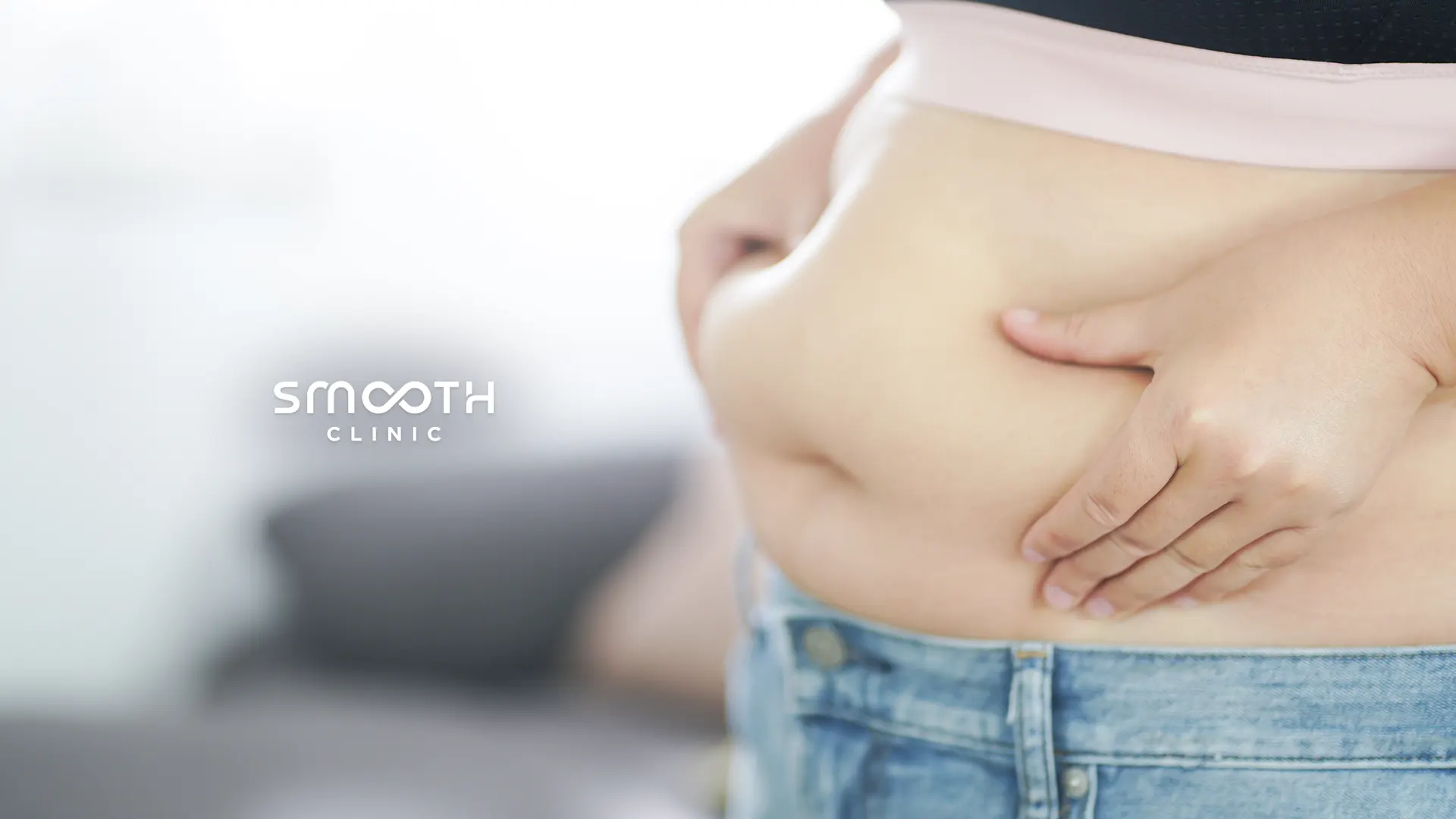
What Is Subcutaneous Fat?
Subcutaneous fat is the layer of fat beneath the skin, below the dermis. It is a normal and essential part of the body, storing energy, helping insulate against heat loss and cushioning underlying tissues.
You can usually pinch this fat on areas such as the arms, thighs, abdomen or hips. Its amount and distribution vary between people. A softer or rounder body shape does not, by itself, mean that someone has a health problem.
Subcutaneous Fat vs Visceral Fat
“Belly fat” can mean two different things: subcutaneous fat beneath the abdominal skin and visceral fat deeper inside the abdomen, around internal organs.
- Subcutaneous fat: sits under the skin and can usually be pinched.
- Visceral fat: surrounds organs within the abdominal cavity and cannot be pinched directly from outside.
- Health effects: both can be associated with metabolic risk, but visceral fat has a stronger association with problems such as insulin resistance, type 2 diabetes and cardiovascular risk factors.
Waist size can help assess abdominal health risk, but it does not measure visceral fat directly. A pinch test or body shape alone cannot tell you how much visceral fat you have.
Why Does Subcutaneous Fat Increase?
Genetics, hormones, age and sex all influence where the body stores fat. Over time, taking in more energy than the body uses can increase fat stores. Physical activity, sleep, some medicines and certain health conditions can also affect weight.
These factors interact; fat distribution is not simply a measure of willpower. Some people have noticeable fat in one area even when their weight is stable and their overall health is good.
Is Subcutaneous Fat Dangerous?
Having subcutaneous fat is normal, and removing as much as possible is not a health goal. Larger amounts of body fat can be associated with health problems, but appearance alone is not enough to assess risk.
A clinician may consider weight history, waist size, blood pressure, blood sugar, cholesterol and personal or family history. BMI can be one screening tool, but it does not distinguish muscle from fat or show where fat is stored. It should not be used alone to choose a cosmetic procedure.
How to Reduce Excess Subcutaneous Fat
If weight loss would benefit your health, a sustainable eating and activity plan can reduce overall body fat. You do not need to eliminate rice or follow an extreme diet.
Choose an eating pattern you can maintain
- Include vegetables, whole fruit, whole grains and enough protein, such as fish, eggs, chicken, tofu or beans.
- Adjust portions to your needs and reduce sugary drinks or frequent energy-dense snacks.
- Choose changes that fit your usual meals, work and social life. A dietitian can help if you need an individual plan.
Combine aerobic activity with strength training
For general health, WHO recommends 150–300 minutes of moderate-intensity aerobic activity each week, or 75–150 minutes of vigorous activity, plus muscle-strengthening activity on at least two days. Start with what you can manage and build up gradually. These are health guidelines, not a guaranteed fat-loss prescription.
Brisk walking, swimming or cycling can be practical choices. If heat makes outdoor exercise difficult in Thailand, consider cooler times of day or an indoor option. Seek tailored advice if a health condition limits your activity.
Support your routine with sleep and stress management
Regular sleep and manageable routines can support long-term weight management. Relaxation, social support and realistic goals may help you maintain changes. If progress is difficult or weight changes unexpectedly, a clinician can review possible contributing factors.
Common Misconceptions About Fat Reduction
| Claim | What to know |
|---|---|
| Massage permanently removes fat | Ordinary massage has not been shown to permanently remove subcutaneous fat. Some treatments may temporarily change fluid retention or the appearance of cellulite. |
| Sit-ups specifically remove belly fat | Abdominal exercises strengthen the muscles, but they are not a reliable way to selectively reduce the fat over them. |
| Subcutaneous fat is always harmless | It has useful functions, but overall fat distribution and metabolic health still matter. |
| A crash diet is the best solution | Extreme restriction can be difficult to sustain and may compromise nutrition. Choose a plan that supports health over time. |
Is Subcutaneous Fat the Same as Cellulite?
No. Cellulite is the dimpled appearance created by the relationship between fat beneath the skin and the connective tissue bands that tether the skin. It can occur in people of different body sizes and does not mean that someone is unhealthy.
Reducing fat does not necessarily remove cellulite. Skin laxity and connective tissue structure also affect its appearance, so a fat-reduction treatment may not address the main concern.
What Can Fat-Reduction Devices Do?
Some devices can reduce a small, localised fat bulge. They do not treat obesity, produce meaningful overall weight loss or treat visceral fat. Results can be modest, and some people see little change.
| Technology | How it is used | Important limits and risks |
|---|---|---|
| Cryolipolysis, including CoolSculpting | Controlled cooling targets local fat deposits. | Bruising, soreness and numbness can occur. Rarely, the treated fat enlarges instead of shrinking, called paradoxical adipose hyperplasia (PAH); surgery may be needed. |
| Radiofrequency (RF) | Uses electrical energy to heat tissue. | Fat reduction, temporary circumference change and skin tightening are different outcomes. Effects depend on the device. Burns, pigment changes and scarring are possible. |
| Focused ultrasound | Some systems target fat; others are designed for skin tightening. | A facial lifting device is not automatically a body-fat treatment. Possible complications include burns and nerve injury. |
| Laser or light-based treatment | Includes heat-based devices and low-level light systems. | These are not interchangeable with laser-assisted liposuction, which involves an invasive procedure. Results and recovery depend on the method; heat-based treatment can cause burns. |
Ask for the exact device, intended treatment area and evidence for the result you want. A general label such as “HIFU” or “RF” does not establish suitability or authorisation for every use in Thailand.
Should You Reduce Fat or Tighten Skin?
First identify whether the concern is a local fat deposit, sagging skin, cellulite or a combination. Removing fat does not automatically tighten loose skin, and reducing facial volume can sometimes make hollowness more noticeable.
A clinician should assess the area and your goals before recommending a procedure. If laxity is the main concern, our HIFU and RF comparison explains the differences between these skin-tightening approaches.
Who Needs Extra Caution Before Treatment?
Postpone elective fat-reduction treatment during pregnancy. If breastfeeding, discuss the exact procedure and any medicines with your clinician; suitability and precautions vary. Tell the clinician about medicines, bleeding problems, medical implants, previous surgery, hernias, skin conditions and unusual reactions to cold or heat. Do not stop prescribed medicines yourself.
Contraindications depend on the technology. For example, some cold-related disorders rule out cryolipolysis, while active electronic implants can rule out RF or ultrasound treatments. An active infection or damaged skin at the proposed site needs assessment before proceeding.
Recovery, Results and Aftercare
Changes generally develop over weeks to months rather than immediately. The number of sessions and review interval depend on the exact device, treatment area and response. There is no single schedule that applies to all RF, ultrasound or laser treatments.
Many non-invasive procedures allow a quick return to usual activities, but swelling, bruising, soreness or altered sensation can still occur. Ask for procedure-specific instructions about exercise, massage, compression garments and follow-up. Drinking extra water does not “flush out” fat.
Contact the treating clinic promptly for severe or worsening pain, blistering, an open wound, increasing redness or drainage, or persistent weakness or altered sensation. Also report a new, firm bulge that develops after fat freezing, even if it appears months later.
Keeping weight reasonably stable may help maintain the contour, but results are not guaranteed and later weight changes can affect it.
What Should You Ask About Cost in Thailand?
Request a written quote in Thai baht that names the device and treatment area, states whether the price is per area, applicator cycle or session, and lists the expected course and follow-up costs. Confirm current pricing and availability directly with the clinic before booking.
If you are unsure whether your concern is fat or loose skin, ask Smooth Clinic about an assessment before choosing a treatment package.
References
- Cleveland Clinic: Subcutaneous Fat.
- Fox et al. Abdominal visceral and subcutaneous fat and metabolic risk factors. Circulation, 2007.
- Harvard T.H. Chan School of Public Health: Body Fat and its measurement.
- NIDDK: Eating and Physical Activity to Lose or Maintain Weight.
- World Health Organization: Physical Activity.
- Vispute et al. The effect of abdominal exercise on abdominal fat. Journal of Strength and Conditioning Research, 2011.
- American Academy of Dermatology: Cellulite treatments.
- U.S. FDA: Non-Invasive Body Contouring Technologies.
- American Society of Plastic Surgeons: Nonsurgical Fat Reduction.
- American Academy of Dermatology: What to expect from non-invasive fat removal.