
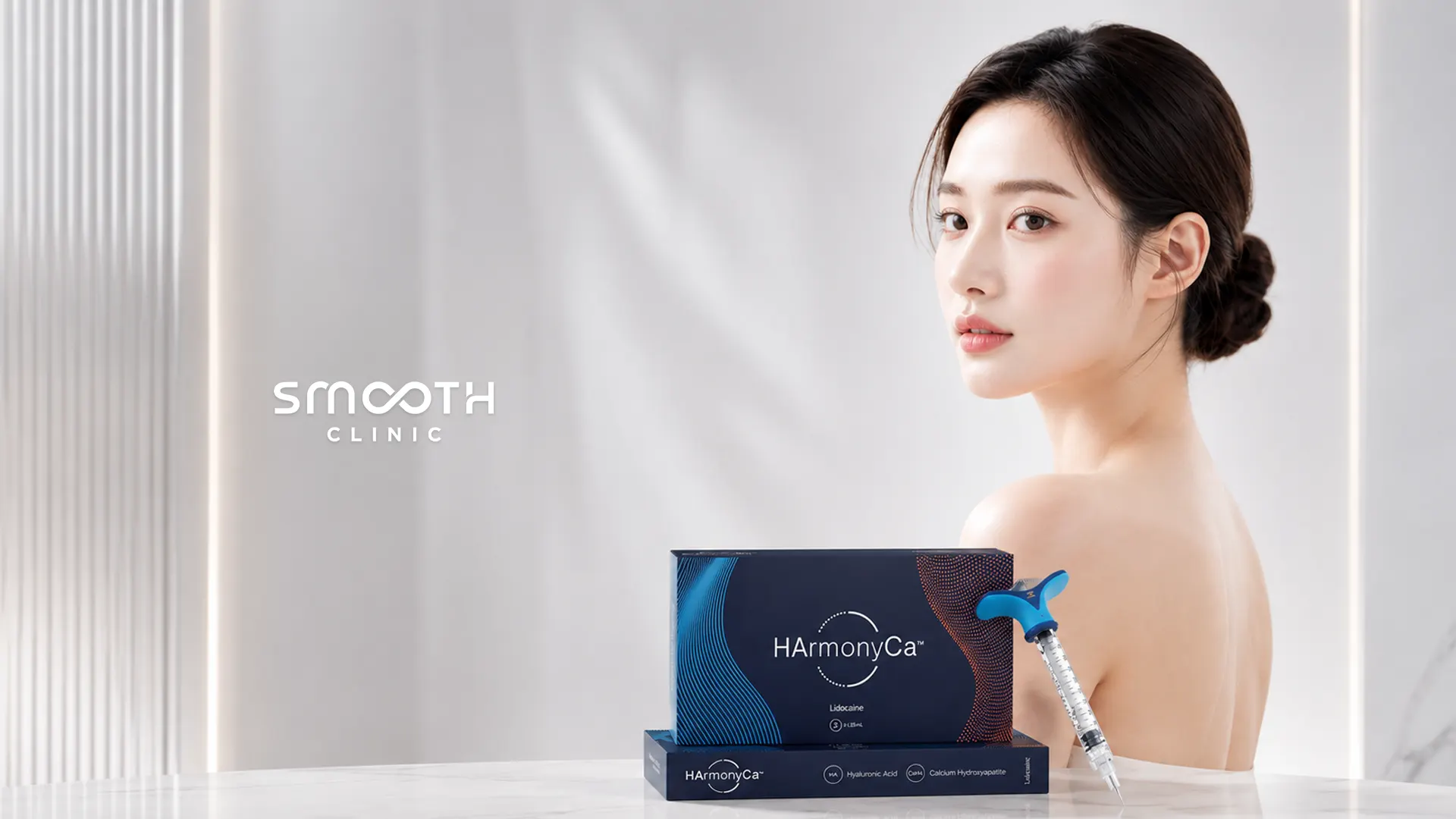
What is HArmonyCa, and how does it work?
HArmonyCa is a hybrid dermal filler that combines hyaluronic acid (HA) gel with calcium hydroxyapatite (CaHA) microspheres. HA provides volume, while CaHA supports a gradual collagen response. It is intended to add volume to facial soft tissue in selected areas, rather than treat every cause of loose skin.
HArmonyCa Lidocaine contains HA at 20 mg/mL and lidocaine at 3 mg/mL in a 1.25 mL prefilled syringe. The local anaesthetic helps reduce discomfort; it does not make injections painless. The product is supplied ready to use, so it should not be described as routinely mixed with extra lidocaine.
Who might it suit, and where can it be used?
Adults with facial volume loss may be candidates after assessment. Studies have examined the cheek area, with jawline treatment also included in some research. Your doctor must assess anatomy, skin condition, previous injections and the exact product instructions before choosing a treatment area or amount.
There is no ideal 30–50 age range, and treatment goals should reflect your preferences rather than assumptions about male or female facial features. More volume is not always the right answer to sagging.
The manufacturer’s Thai information excludes the area between the eyebrows, around the eyes, the lips and surrounding mouth area. It also excludes superficial skin layers and areas containing foreign material. Do not select temple or under-eye treatment simply because a clinic lists it as a popular injection site.
When will results appear, and how long do they last?
Some fullness may be visible soon after injection, although swelling can obscure the early result. Changes associated with the tissue response develop over weeks to months.
A published study followed 140 people for 12 months and found improvements in midface volume and appearance. It included formulations with and without lidocaine, and many participants received an optional touch-up two weeks after their first treatment. It was an open-label study without a control group, so it does not establish that HArmonyCa lasts longer than other fillers.
The manufacturer’s Canadian information also describes results lasting up to 18 months. This is not a guaranteed or average duration for everyone. Review the result with your doctor before deciding on further treatment; neither an automatic annual top-up nor a fixed number of sessions suits every patient.
How does it compare with HA filler, Radiesse and Sculptra?
| Product type | Main distinction |
|---|---|
| HArmonyCa | HA and CaHA in one gel, combining volume replacement with a gradual collagen response. |
| HA-only fillers | Different gels for different treatment goals and areas. Their effects and duration depend on the exact product. |
| Radiesse | CaHA in a carboxymethylcellulose gel carrier, rather than HA. It can provide immediate volume when used for that purpose, as well as stimulating collagen. |
| Sculptra | Contains poly-L-lactic acid (PLLA), with results that develop gradually. Its formulation and treatment plan differ from HArmonyCa. |
These products are not interchangeable. Choose by the concern, treatment area, risks and correction options. For background on HA products, see our guide to hyaluronic acid and fillers.
Can HArmonyCa be dissolved?
Not completely with hyaluronidase. This enzyme breaks down HA, but it does not dissolve the CaHA component in the same way. Treating the HA portion cannot guarantee removal of the hybrid filler, correction of a lump or reversal of a serious complication.
Discuss this limitation before injection. Our guide to filler dissolving and its limitations explains why the injected material and the cause of a problem matter.
Who should avoid treatment or discuss extra precautions?
The product information lists contraindications including:
- Pregnancy, breastfeeding or being under 18.
- Allergy to its ingredients, lidocaine or related local anaesthetics; previous anaphylaxis or multiple severe allergies; and allergy to, or a contraindication to treatment with, steroids.
- Skin disease, infection or inflammation near the treatment site, herpes, or autoimmune disease.
- A tendency to form keloids or raised scars, impaired healing, or prolonged bleeding caused by a condition or medicine.
Postpone injections into an infected or inflamed area until it has been assessed and treated and the condition is controlled. Tell the doctor about all medicines and supplements, previous filler, dental treatment and other planned procedures.
The instructions warn against use while taking substances that prolong bleeding, including aspirin and anticoagulants. Do not stop prescribed medication yourself to have a cosmetic injection. The treating doctor and prescriber should assess whether treatment is appropriate.
What are the side effects and urgent warning signs?
Pain, swelling, redness, bruising, tenderness and itching can occur. Swelling may take about a week to settle, and some reactions last longer. Allow for recovery rather than assuming no downtime. Infection, persistent lumps, migration and delayed inflammatory or allergic reactions are also possible.
Accidental injection into a blood vessel can cause tissue damage, blindness or stroke. Seek immediate medical care for severe or unusual pain, pale or mottled skin, or a blue-grey colour after treatment. Vision changes, facial drooping, weakness or difficulty speaking require emergency hospital care immediately.
Breathing difficulty, throat or tongue swelling, faintness or collapse also need emergency help. Do not wait for a routine clinic appointment. Increasing redness, warmth, swelling, fever, discharge or a new persistent lump needs prompt medical assessment.
How should you prepare and care for the area afterwards?
- Get product-specific instructions before the appointment, including advice about makeup, medicines and planned skin treatments.
- Avoid strenuous exercise, strong sunlight and extreme heat or cold for the first 24 hours, or longer if advised. Use a cold compress as directed.
- Follow the doctor’s guidance on washing, makeup and massage. Do not try to correct a lump yourself or borrow a massage routine intended for another injectable.
- Discuss laser, peeling and ultrasound procedures in advance. The HArmonyCa instructions specify at least four weeks between these treatments and injection.
- Attend the agreed review and know how to get urgent help if symptoms develop.
What should you check about treatment and cost in Thailand?
Choose a licensed clinic and a doctor familiar with the product. Ask to see the exact product name, Thai label and authorization details, sealed packaging, batch number and expiry date. Overseas approval or a CE mark does not establish the Thai status or suitability of every use.
Request a total quote showing the number of syringes, volume in millilitres, treatment fees and follow-up charges. Cost per syringe alone can be misleading when products have different syringe sizes or treatment plans.
You can contact Smooth Clinic to ask about an assessment and current costs. Confirm availability, the proposed product, follow-up arrangements and an explanation you understand before booking.
References
- Allergan Aesthetics Thailand. HArmonyCa Lidocaine treatment information and contraindications.
- AbbVie. HArmonyCa Lidocaine Instructions for Use, June 2024, English section. Product instructions vary by market; the treating doctor must check the supplied Thai instructions.
- Gritti A, et al. Prospective, open-label study of an HA–CaHA hybrid injectable. Journal of Cosmetic Dermatology. 2025;24:e70430. Manufacturer-funded; 12-month follow-up with optional early touch-up.
- Allergan Aesthetics Canada. HArmonyCa patient information, July 2026. The up-to-18-month claim cites company data on file.
- Merz Aesthetics Canada. Radiesse mechanism of action. Galderma. Sculptra Instructions for Use. Used for formulation differences, not Thai authorization claims.
- U.S. FDA. Dermal filler risks and 2025 dermal filler panel summary, pages 16–17 on removal limitations. These sources do not establish HArmonyCa’s regulatory status in Thailand.