
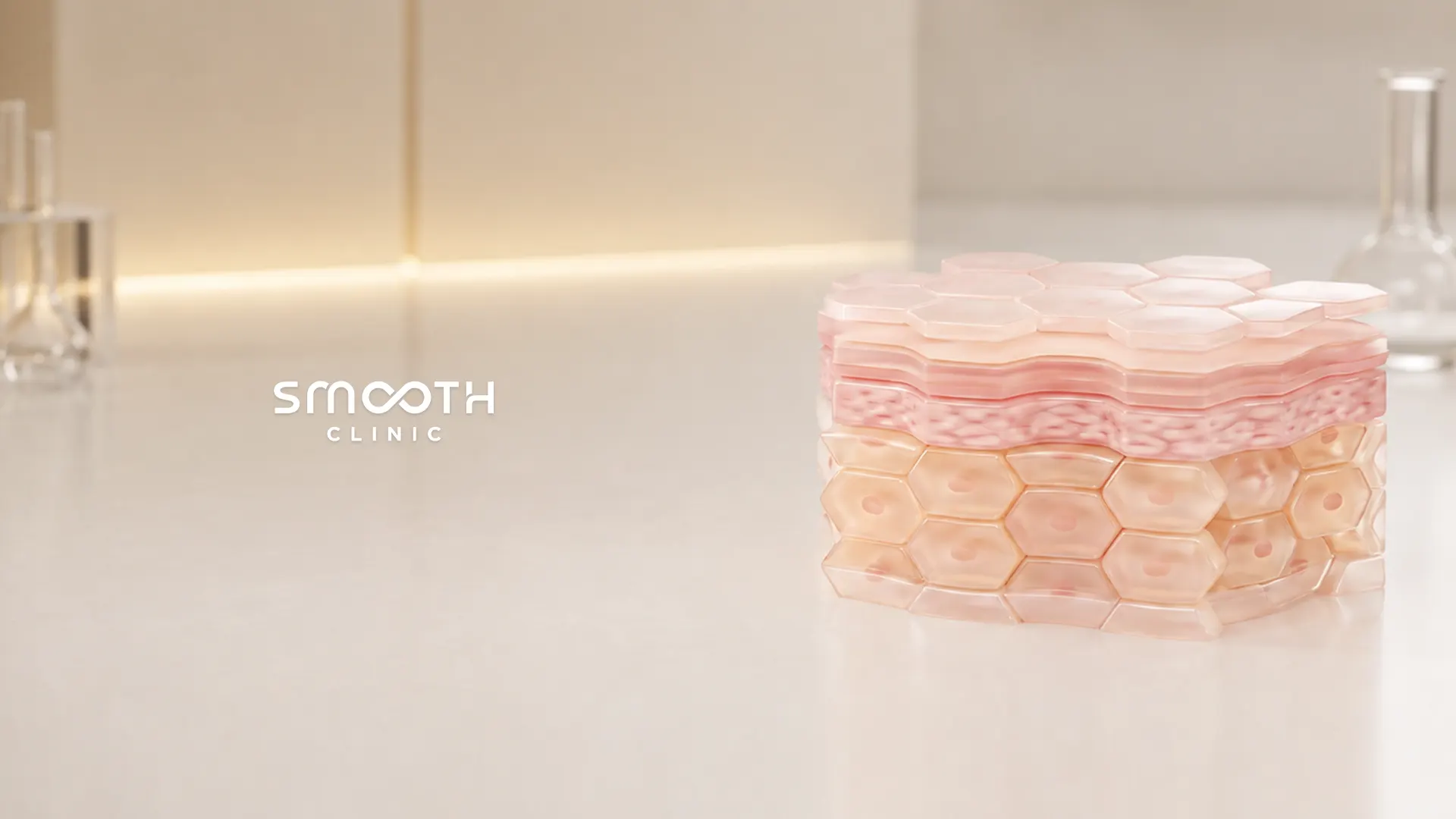
What is the SMAS layer?
SMAS stands for superficial musculoaponeurotic system. It is a network of fibrous tissue and muscle beneath the facial skin that connects the muscles of facial expression with the overlying tissues. It helps transmit movement when you smile or change expression.
The SMAS is part of the face’s support system, rather than a separate layer of the skin itself. Its structure and relationship to surrounding fat and muscles vary across the face.
How deep is the SMAS?
There is no single SMAS depth that applies to every face or treatment area. The thickness of the skin and fat above it varies by location and between people. A cartridge’s stated treatment depth does not prove that it will reach the SMAS in a particular person.
Choosing a deeper setting is not automatically more effective or safer. Treatment planning needs to account for the intended tissue and nearby structures, including nerves and bone.
How does the SMAS relate to facial aging?
The SMAS changes with age, but it is not the only cause of sagging. Changes in skin elasticity, facial fat and the underlying bone also affect facial contours. A less-defined jawline or deeper facial fold cannot be explained by the SMAS alone.
Do all lifting treatments need to reach the SMAS?
No. Different treatments address different tissues. Some skin-tightening treatments work mainly by heating collagen-containing tissue within the skin. Selected focused-ultrasound treatments can also target deeper tissue. Reaching the SMAS is not a universal requirement for a useful result.
A surgical facelift can reposition facial tissues, including the SMAS. Non-surgical energy treatments do not reposition tissue in the same way and should not be expected to reproduce a surgical facelift.
How are ultrasound and RF different?
Ultherapy PRIME uses microfocused ultrasound with real-time imaging. The imaging helps the practitioner check tissue depth and contact before delivering energy. Imaging depth and treatment depth are different; seeing tissue on screen does not mean energy is delivered throughout that entire depth.
Ultraformer III uses micro- and macro-focused ultrasound with different cartridges. It should not be assumed to have the same imaging capability, treatment targets or clinical outcomes as Ultherapy PRIME. Evidence for one device or cartridge cannot automatically be applied to another.
Oligio X and XERF RF are non-invasive monopolar radiofrequency devices. RF uses electrical energy to heat tissue, rather than focused ultrasound. Its effects depend on the device and treatment settings; describing all RF as working only in the mid-dermis is too simplistic.
RF microneedling is a separate approach that delivers energy through needles. Its risks and recovery should not be treated as identical to non-invasive RF. For treatment in Thailand, confirm the exact model, intended use and local registration with the provider; overseas clearance does not establish Thai regulatory status.
Who may benefit, and what are the limits?
Some adults with mild skin laxity may benefit from non-surgical treatment. Suitability depends on the concern and examination, not an age threshold. Marked sagging, excess skin or loss of facial volume may need a different approach.
Previous disappointing HIFU or RF results are a reason to reassess the cause, rather than automatically choose deeper or stronger treatment. Tightening is also different from reducing fat, and a slimmer face is not a guaranteed result.
Does treatment hurt, and how long do results last?
Discomfort, recovery and durability vary by device, treatment area and person. Improvements may develop over several months, but there is no single result timeline or annual maintenance schedule for every “SMAS lifting” treatment. Results are not permanent, and further treatment should follow reassessment.
Non-invasive does not mean risk-free. Pain, redness, swelling, tenderness and bruising can occur. Ultrasound treatment can also cause burns, scarring, unwanted fat or volume loss and nerve effects. Seek prompt medical assessment for blistering, severe or worsening pain, persistent numbness or new facial weakness.
The practitioner should check the chosen device’s contraindications and precautions. Relevant issues include skin infection or open wounds, implanted devices or metal in the treatment area, pregnancy, and recent facial procedures. Restrictions differ by device; a general “SMAS lifting” label is not enough to assess safety.
Ask about an assessment
To ask about treatment options and current availability, contact Smooth Clinic. The earlier version of this article advertised a free consultation; confirm whether that offer still applies when enquiring.
References
- Macchi V, et al. Anatomo-radiological study of the superficial musculo-aponeurotic system of the face. 2007.
- Objective analysis of age-related changes in the SMAS in Japanese females using computed tomography. 2023.
- Analysis of the anatomic changes of the aging facial skeleton using computer-assisted tomography. 2009.
- American Society for Dermatologic Surgery. Non-invasive skin tightening treatments.
- Ulthera. Ultherapy PRIME: US instructions for use; how the treatment works and its limits.
- CLASSYS. Ultraformer III technology overview. Manufacturer information.
- WONTECH. Oligio X technical information (Korean); Cynosure Lutronic. XERF technical information. Manufacturer information.
- US Food and Drug Administration. Potential risks with certain uses of RF microneedling. 2025.