What is Nabota Botox?
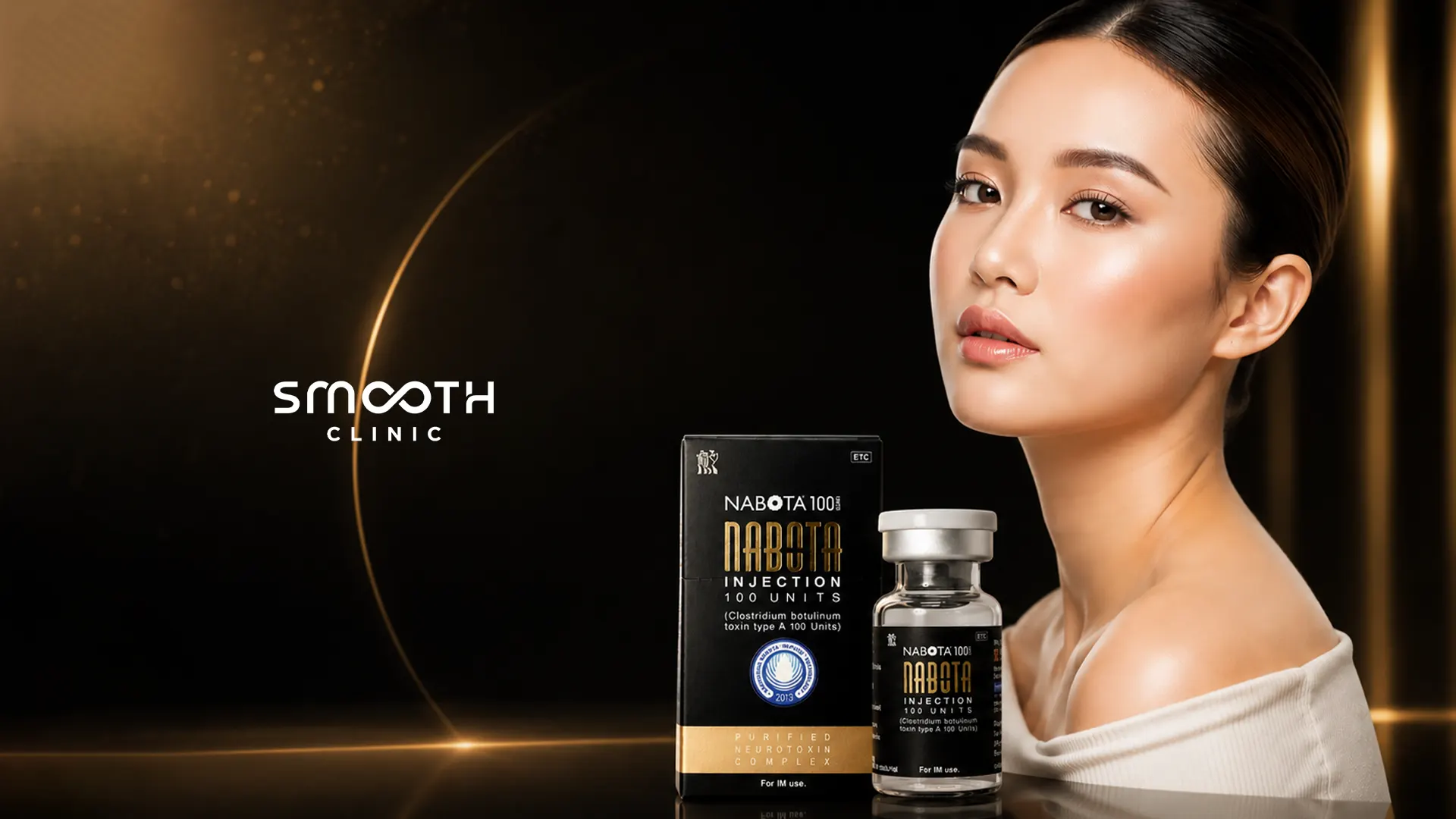
Nabota is a botulinum toxin type A medicine made by Daewoong Pharmaceutical in South Korea. It temporarily reduces activity in targeted muscles, which can soften expression lines in suitable patients.
Although people often say “Nabota Botox,” BOTOX is a separate brand. Nabota has its own product registration, evidence and prescribing information.
Is Nabota registered in Thailand, and what can it treat?
The Thai FDA record for NABOTA INJECTION, 100 units per vial, registration 1C 3/57 (BF) lists an active registration, with Daewoong Pharmaceutical (Thailand) as the licensee. The quantity on the vial is not the amount every patient needs.
Its cosmetic indication is moderate to severe frown lines between the eyebrows in adults aged 20–65. The record also includes focal upper-limb spasticity after stroke in adults over 18, a separate medical use.
Horizontal forehead lines, crow’s feet, jaw slimming and facial contouring are not listed in this Thai record. If one of these is proposed, ask the doctor to check the current Thai label and explain any off-label use, expected benefit, alternatives and risks. A broad jaw may involve bone or fat as well as muscle.
Do not confuse this Thai registration with the U.S. approval for Jeuveau. A foreign approval has its own indications and does not authorize every proposed use of Nabota in Thailand.
How does Nabota compare with Allergan or Neuronox?
A randomized trial supports Nabota’s effectiveness for frown lines, finding it comparable to onabotulinumtoxinA under the study conditions. It does not establish that Nabota is better, or that the products perform equally in every treatment area.
Allergan BOTOX and Neuronox are different products with their own labels and evidence. Units are product-specific, so a unit-for-unit price comparison can be misleading. Choose based on the concern being treated, a traceable product and the doctor’s assessment. The separate Allergan Botox guide explains that product’s Thai uses and price context.
When will you see results, and how long do they last?
Frown lines may start to soften within a few days, with changes developing gradually. A small Nabota study observed early improvement, but it did not compare brands or establish long-term duration.
For botulinum toxin wrinkle treatment generally, effects often last around 3–4 months, sometimes longer. This is a general guide, not a Nabota-specific guarantee for every person or area. Agree a review date with the treating doctor rather than assuming the result will last 4–6 months.
If the result is weaker than expected, have it assessed before adding injections. A poor response does not automatically mean resistance; see why botulinum toxin may seem not to work.
How much does Nabota Botox cost?
The total depends on the treatment area, number of units and services included. Ask for a quote in Thai baht that identifies the product, proposed treatment and whether consultation, follow-up or any additional treatment costs extra.
Package names such as “wrinkle treatment” or “jaw slimming” do not tell you whether the same areas or services are included. Contact Smooth Clinic to confirm current Nabota availability, pricing and any promotion conditions before booking.
What should you look for in reviews and before-and-after photos?
Look for the treatment area, timing and comparable lighting and facial expressions. A result shown for frown lines cannot predict jaw-slimming results, and photographs cannot guarantee how you will look.
A natural-looking outcome depends on the treatment plan and your anatomy. It is not guaranteed by the brand or a purity claim. Discuss which movement you want to preserve and what improvement is realistic.
Who should avoid treatment or get extra medical advice?
- Previous allergy or an infected injection site: do not have injections if you have a known allergy to botulinum toxin or its ingredients, or an infection where treatment is planned.
- Muscle, nerve, swallowing or breathing problems: tell the doctor, as these can increase the risk of complications.
- Pregnancy or breastfeeding: discuss postponing elective cosmetic injections because safety information is limited.
- Medicines and previous injections: disclose recent botulinum toxin treatments and medicines, especially muscle relaxants and certain antibiotics. Do not stop prescribed medicines yourself.
How can you check the product before treatment?
Use a licensed medical clinic and a qualified doctor. Ask to see the box and vial, and check the product name, Thai registration, batch number, expiry date and importer details. Ask the clinic about its traceable supply source.
A registration number or packaging photograph alone cannot prove that an individual vial is genuine. Do not buy botulinum toxin for self-injection.
Does it hurt, and what aftercare is needed?
Injections can sting, and swelling or bruising is possible. Ask about options to reduce discomfort. Many people return to everyday activities quickly, but allow time for visible marks before an important event.
Avoid rubbing or massaging the treated area. Follow the doctor’s advice on exercise, alcohol and follow-up; do not rely on a universal 4–6-hour rule to prevent complications.
Which side effects need medical attention?
Possible effects include soreness, swelling, bruising, headache, a drooping eyelid and unwanted weakness in nearby muscles. Contact the treating doctor about persistent or troublesome symptoms.
Seek urgent medical care for difficulty breathing, swallowing or speaking, widespread weakness or double vision. Toxin effects can spread beyond the treated area, with symptoms appearing hours to weeks after injection. Facial or throat swelling with breathing difficulty may be a severe allergic reaction and also needs emergency care.
References
- Thai FDA. NABOTA INJECTION, registration 1C 3/57 (BF). Thai product identity, status and indications; checked 11 October 2026.
- Evolus. JEUVEAU U.S. prescribing information. U.S. indication and botulinum toxin safety warnings; does not replace Nabota’s Thai prescribing information.
- Won CH, et al. Comparative trial of DWP450 and onabotulinumtoxinA for glabellar lines. Int J Dermatol. 2015;54:227–234.
- Song S, et al. Safety, efficacy and onset of Nabota for glabellar frown lines. Arch Craniofac Surg. 2018;19:168–174. Small, single-arm study sponsored by Daewoong Pharmaceutical.
- American Academy of Dermatology. Botulinum toxin therapy: FAQs. General duration, recovery and aftercare guidance.