
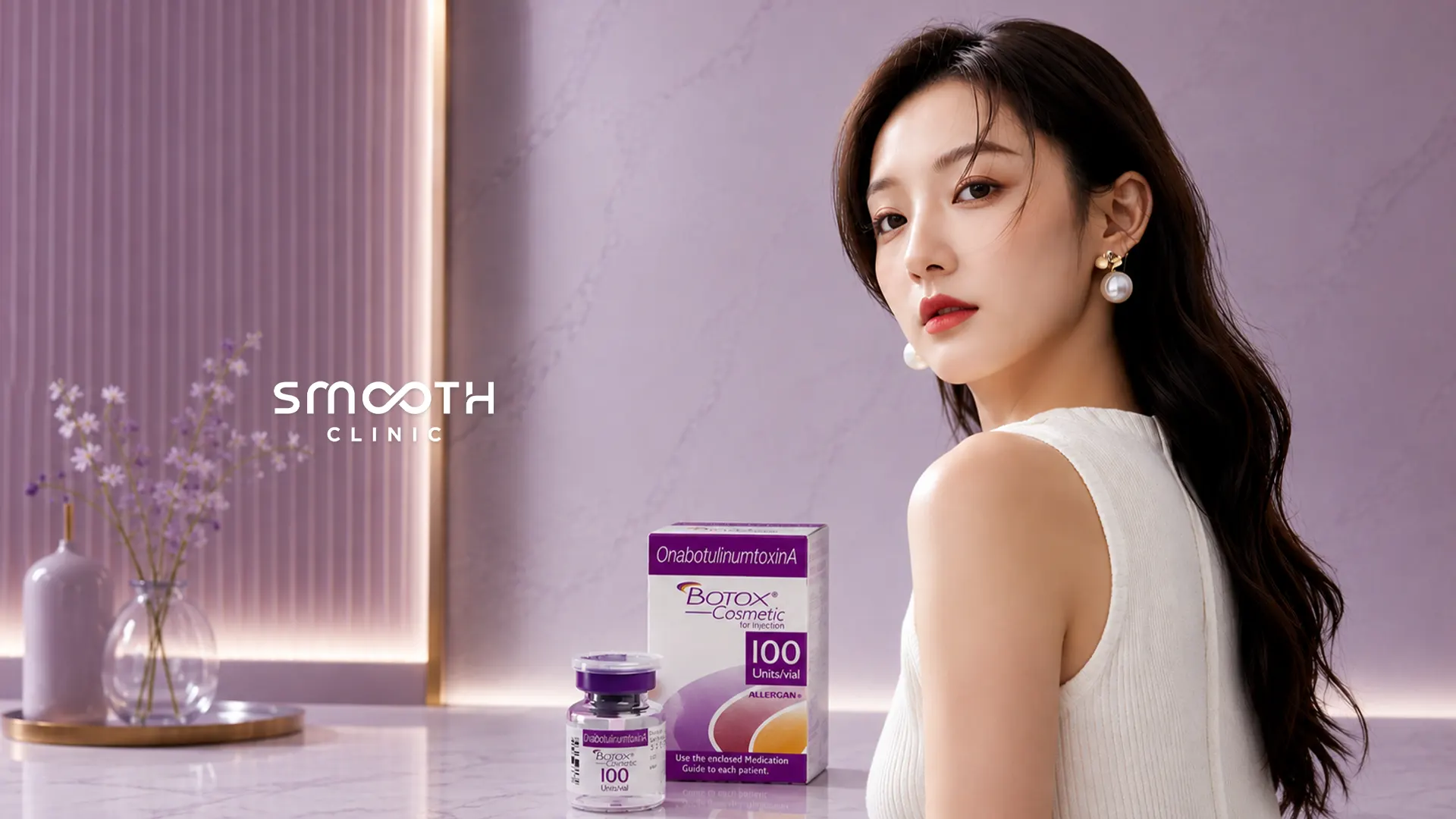
What is Allergan Botox?
Allergan Botox usually refers to BOTOX (onabotulinumtoxinA), a prescription botulinum toxin type A medicine. It temporarily reduces nerve signals that make muscles contract, helping soften expression lines and treat certain medical conditions.
BOTOX is a brand, not the name of every botulinum toxin product. Allergan is now part of AbbVie. A familiar brand name does not replace an individual assessment of the treatment, risks and expected benefit.
Where is it made, and is it registered in Thailand?
The Thai FDA record for BOTOX, 100 units per vial, registration 1C 21/55 (NB), lists an active registration. It names ALLERGAN PHARMACEUTICALS IRELAND in County Mayo, Ireland, as the manufacturer and AbbVie Pharmaceuticals (Thailand) as the licensee.
This identifies one specific registered product and pack size. A company’s home country is not necessarily where the medicine is made. Check the actual product before treatment: this record does not verify every vial, other pack sizes or current clinic stock.
How much does Allergan Botox cost in Thailand?
Smooth Clinic’s original English article listed these promotions:
- 50 Units: ฿13,500
- 100 Units: ฿19,500
These are previously published prices. Ask Smooth Clinic about current pricing, availability, promotion dates and what the quote includes before booking. The quantities are the original offer terms, not recommended doses or confirmation of a particular vial size.
Higher cost alone does not establish better results. Consider the assessment, traceable product, treatment plan and follow-up as well as the price.
What can BOTOX treat?
The appearance-related indications in the Thai registration above include the following uses in adults:
- Upper-face lines: temporary improvement of frown lines, crow’s feet and forehead lines.
- Jaw muscles: improving the appearance of the masseter muscles. A wide jaw caused mainly by bone or fat needs a different assessment.
- Neck muscles: improving their appearance. Neck Botox addresses muscle activity; it does not remove a double chin or excess skin.
The same record includes medical uses such as preventing chronic migraine in adults and treating excessive underarm sweating. These require a different assessment from cosmetic treatment.
Do not assume that chin dimpling, nose lines or mouth-corner injections are covered by those indications. A doctor should check the exact product’s Thai prescribing information and explain any proposed off-label use, alternatives and risks.
How does it differ from other botulinum toxin brands?
Products differ in formulation, manufacturing and clinical evidence. Their units are not interchangeable, so comparing prices per unit alone can be misleading.
BOTOX contains accessory proteins alongside the active toxin. Protein content or molecular size alone does not prove less spread, greater precision, longer duration or a lower risk of resistance than every other brand. Results also depend on anatomy, treatment planning and individual response.
When does it work, and how long does it last?
Changes develop gradually rather than immediately. For frown lines, the U.S. BOTOX Cosmetic label describes onset in about 1–2 days, increasing during the first week, with effects lasting approximately 3–4 months. This is a specific example, not a promise for every person or treatment area.
Arrange follow-up with the treating doctor and reassess before further treatment. The U.S. label supports this timing information; it does not establish which uses are authorized in Thailand.
Who needs extra caution or should postpone treatment?
- Previous allergy to botulinum toxin or its ingredients, or infection at the planned injection site: do not have injections; discuss this with the doctor.
- Neuromuscular disease, swallowing or breathing problems: tell the doctor, as these may increase risk.
- Pregnancy or breastfeeding: discuss postponing elective cosmetic injections because safety information is limited.
- Medicines, supplements or recent toxin treatment: disclose them, including muscle relaxants and certain antibiotics. Do not stop prescribed medicines yourself.
What are the side effects and warning signs?
Possible effects include soreness, swelling, bruising, headache, a drooping eyelid or brow, an uneven smile and unwanted muscle weakness. Recovery varies, and complications can occur even when genuine medicine is used. Contact the treating doctor about troublesome or persistent symptoms.
Seek urgent medical care for difficulty breathing, swallowing or speaking, generalized weakness or double vision. Toxin effects can spread beyond the treated area, with symptoms appearing hours to weeks later. Facial or throat swelling with breathing difficulty may signal a severe allergic reaction and also needs emergency care.
Will switching to Allergan fix a poor response?
Not necessarily. Limited results can reflect the concern being treated, the treatment plan, product handling or, less commonly, neutralizing antibodies. A poor response alone does not diagnose resistance.
BOTOX is not resistance-free, and changing brands does not guarantee that treatment will work again. Have the previous response reviewed before adding treatment or switching products.
How can you check the product before treatment?
- Ask to see the box and vial. Match the product name, pack size, Thai registration number, manufacturer and licensee.
- Check the batch number, expiry date and packaging condition, and ask the clinic about its traceable supply source.
- Use the company’s official verification channel if one is provided. Box colour, photographs or a QR code alone cannot prove authenticity.
- Choose a licensed medical clinic and a qualified doctor. Do not buy toxin for self-injection.
What about discomfort, aftercare and other treatments?
Injections can sting. Many people resume everyday activities quickly, but visible swelling or bruising is possible, so allow time before important events.
Avoid rubbing or massaging the treated area and follow the doctor’s aftercare advice. Ask when to resume strenuous exercise, heat-based activities or another procedure on the same area. Extra water or restricting facial expressions has not been established as a way to guarantee longer-lasting results.
BOTOX may be part of a plan with HIFU skin tightening or laser treatment, but they address different concerns. The doctor should decide the sequence and spacing for the specific procedure; a universal 7–10-day interval is not appropriate for every combination.
References
- Thai FDA. BOTOX 100-unit vial, registration 1C 21/55 (NB). Product identity, manufacturer and Thai indications; checked 11 October 2026.
- AbbVie. Allergan is now part of AbbVie.
- AbbVie. BOTOX Cosmetic U.S. prescribing information. For product information and safety; does not replace Thai prescribing information.
- American Academy of Dermatology. Botulinum toxin therapy: FAQs.
- Eisele KH, et al. Studies on the dissociation of botulinum neurotoxin type A complexes. Toxicon. 2011;57:555–565. Laboratory research, not a clinical ranking of brands.
- Jankovic J, et al. Neutralizing antibody formation with onabotulinumtoxinA across multiple indications. Toxins. 2023;15:342. AbbVie-funded analysis; not a head-to-head brand comparison.