
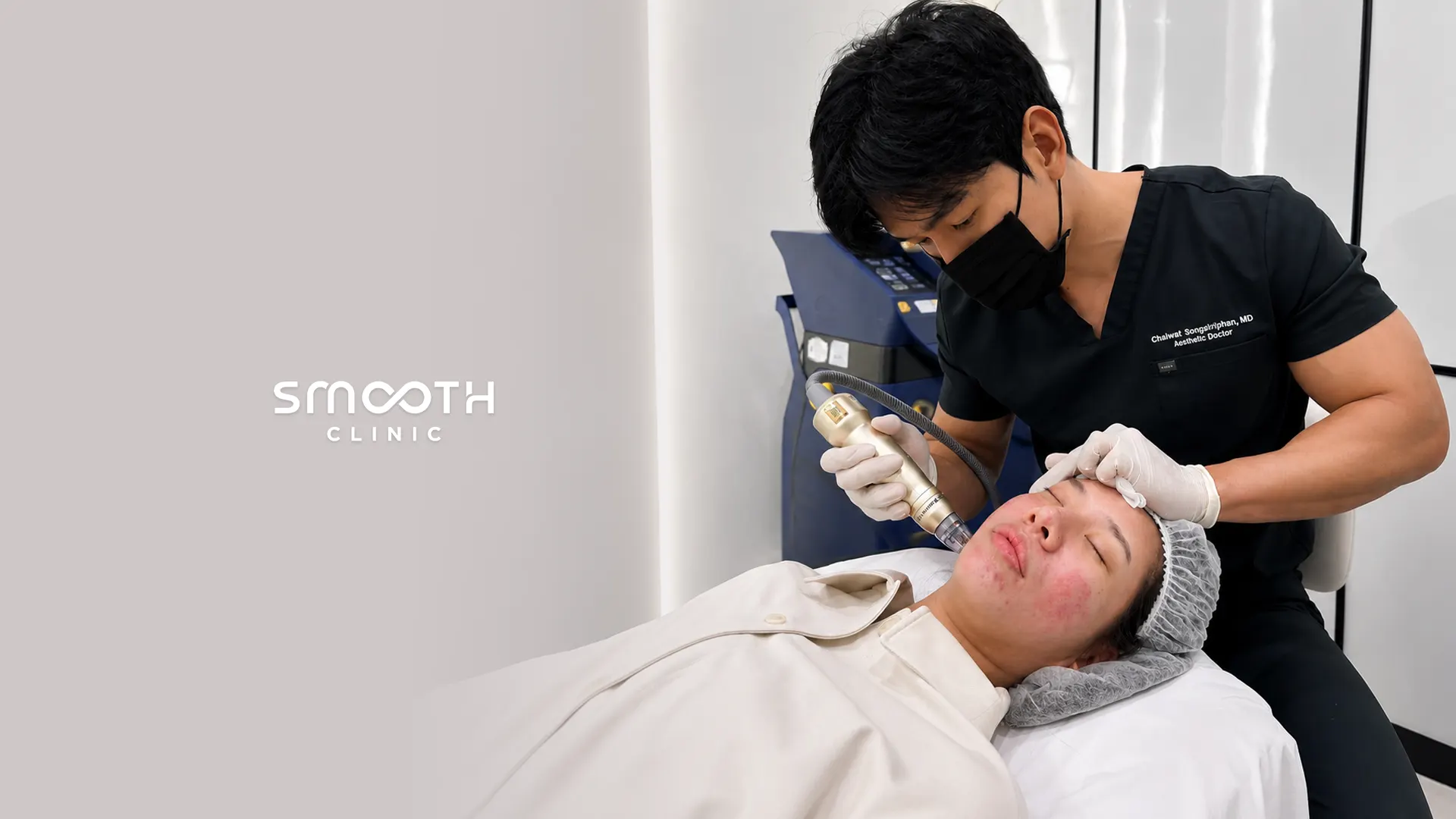
What does RF do for the skin?
RF, short for radiofrequency, uses electrical energy to heat tissue. In skin-tightening treatments, this heat can stimulate collagen remodelling and gradually improve firmness or some wrinkles. The effect depends on the device, treatment area and your skin’s response.
Some RF devices are used on the face, while others treat body areas such as the arms, abdomen or thighs. A device’s suitability for one area does not mean it is suitable for every area, particularly around the eyes.
Non-invasive RF, RF microneedling and fractional RF
- Non-invasive RF: a treatment head rests against the skin without inserting needles. This includes some monopolar, bipolar and multipolar systems. These labels alone do not tell you how effective, comfortable or suitable a treatment will be.
- RF microneedling: small needles enter the skin and deliver RF energy within the tissue. The punctures and heat create different risks and aftercare needs from surface-applied, non-invasive RF.
- Fractional RF: energy is delivered in a pattern of small treatment zones. Some systems use microneedles; others use surface electrodes for resurfacing. “Fractional” does not mean the skin stays intact or that recovery is the same as non-invasive tightening.
Ask for the exact device and applicator name, whether it uses needles, and what it is intended to treat. Results from one system should not be used to promise the same outcome from another.
Who may benefit, and who needs extra caution?
Non-invasive RF may suit people with mild skin laxity or some early wrinkles who want a gradual change. It cannot reproduce a surgical facelift or remove substantial excess skin. Age alone is not a reliable way to choose a treatment.
- Pacemakers or other implanted electronic devices: these are contraindications for many RF systems. Do not proceed without checking the exact device restrictions with your doctor.
- Metal implants, recent procedures, wounds, rashes or infection: tell the doctor what is present in or near the treatment area. Treatment may need to be changed or postponed.
- Pregnancy: postpone elective skin-tightening treatment. If breastfeeding, ask about the proposed procedure and any medicines involved.
- If needles are involved: disclose bleeding problems, poor wound healing, keloids, cold sores, immune suppression and allergies to local anaesthetic. Tell the clinician about medicines you use, including blood thinners and acne treatments.
Do not stop prescribed medicines yourself. Your doctor should assess your medical history, skin tone and tendency to develop pigment changes before choosing a plan.
How is RF different from HIFU and laser?
RF heats tissue using electrical energy. HIFU uses focused ultrasound, while lasers use light. Some lasers work below the surface, so it is misleading to describe all laser treatments as superficial.
The best option depends on the concern, exact device and treatment area. RF is not automatically better for thin skin or less painful than HIFU, and a deeper treatment is not necessarily a better one.
What happens during an RF appointment?
The doctor assesses your skin and medical history, explains the alternatives and agrees on a treatment plan. Preparation, coupling gel, cooling and pain relief depend on the device. RF microneedling also requires a new needle cartridge for every treatment session.
You may feel warmth, heat or pain. Tell the practitioner immediately if it becomes uncomfortable. Appointment length varies with the area, device and preparation; ask how much time to allow rather than assuming every RF session lasts the same length.
When will results appear, and how long do they last?
Changes generally develop gradually as collagen remodels. Your skin may feel firmer at first, but this is not the final result. Improvement may be modest, and some people do not achieve the change they hoped for.
The number of sessions and how long results last vary by device and treatment plan. Ask when your result should be assessed and whether another session is justified. Avoid buying a fixed course solely on a promise of four to six sessions or results lasting six to twelve months.
When reviewing before-and-after photos, check the device, time after treatment, lighting and whether other procedures were used. Another person’s result is not a prediction of yours.
Does RF hurt, and what are the risks?
RF is not always painless. Redness, swelling and discomfort can occur, and excessive heating can cause burns, pigment changes or scars. Non-invasive treatment does not mean zero risk.
RF microneedling can also cause bleeding, crusting and infection. In its 15 October 2025 safety communication, the U.S. FDA reported serious complications with certain uses, including burns, scarring, fat loss, disfigurement and nerve injury. This warning concerns RF microneedling; it does not establish the same risk for every non-invasive RF device.
RF microneedling is a medical procedure and should not be performed at home. Choose a licensed clinician trained in the specific device and discuss its benefits and risks before treatment.
What recovery and aftercare should you plan for?
Some non-invasive treatments involve little interruption to daily life. Needle-based or resurfacing treatments may need more recovery, so do not assume you can return to every activity immediately.
Ask for written instructions covering skin cleansing, sun protection, makeup, exercise and when to restart active skincare. If the skin is broken, check which products are suitable and when to apply them.
Seek prompt medical review for blistering, worsening pain, pus, unexpected skin colour changes, numbness or weakness. Ask whom to contact if a problem develops after you leave the clinic.
How much does RF treatment cost in Thailand?
Cost depends on the exact device, treatment area and plan. Ask for a written quote in Thai baht and confirm whether consultation, treatment tips or needles, medicines and follow-up are included. A lower price or a higher shot count alone does not tell you whether a treatment is appropriate.
For treatment in Thailand, also ask the clinic to confirm the device’s Thai regulatory status and intended use. U.S. FDA clearance does not by itself establish authorisation in Thailand.
Contact Smooth Clinic to ask about current treatment options, prices and arranging a consultation.
References
- American Academy of Dermatology. Many ways to firm sagging skin.
- U.S. FDA. Non-Invasive Body Contouring Technologies: RF mechanisms and precautions.
- U.S. FDA. Microneedling Devices.
- U.S. FDA. Potential Risks with Certain Uses of Radiofrequency (RF) Microneedling. 15 October 2025.
- El-Domyati M, et al. Radiofrequency facial rejuvenation: Evidence-based effect. 2011.
- Shin J, et al. Efficacy and Safety of Monopolar Radiofrequency for Tightening the Skin of Aged Faces. 2024.
- Candela. Matrix applicator technologies: manufacturer information.
- Venus Concept. Venus Legacy technology: manufacturer information.