
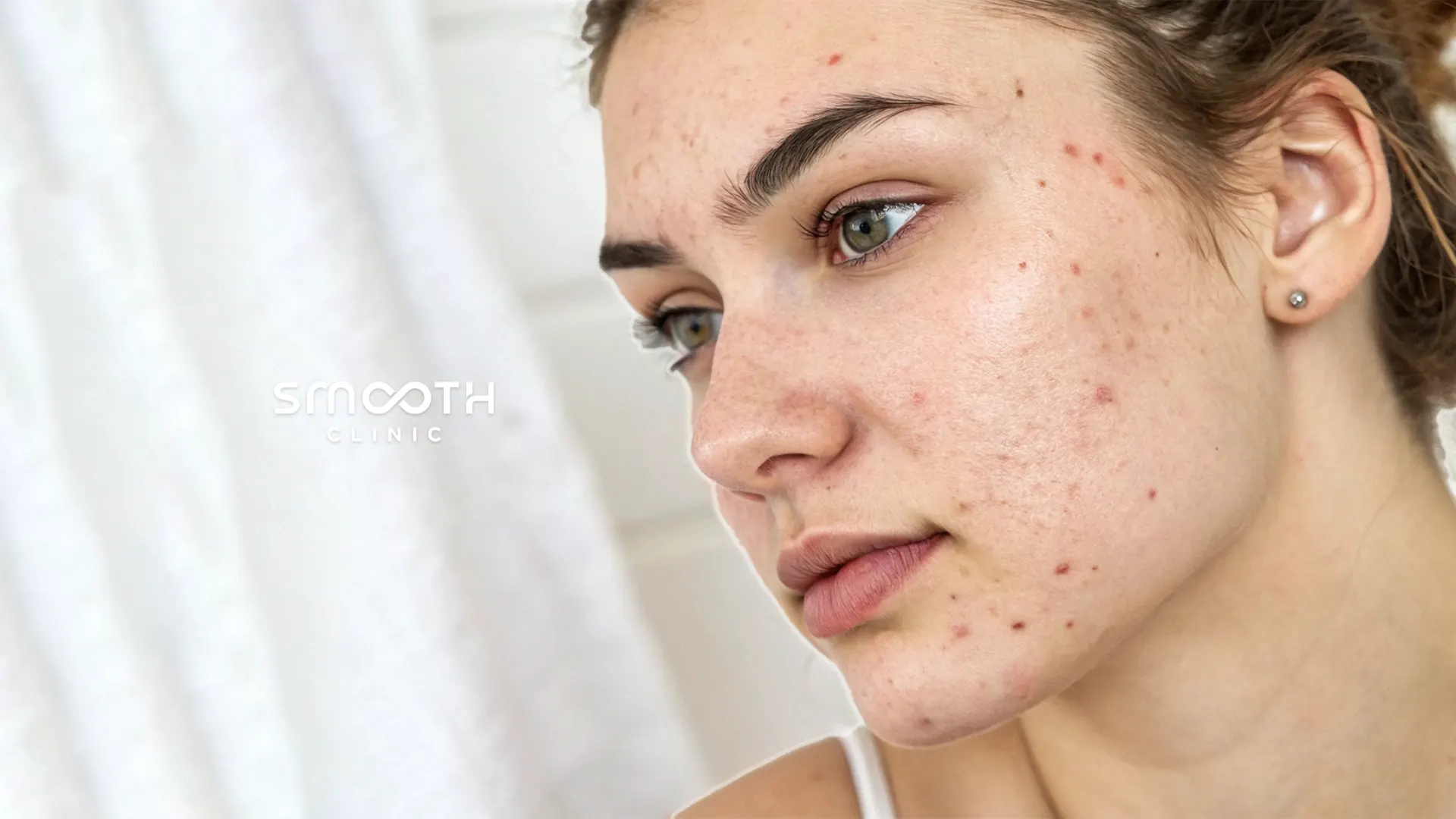
Acne scars or acne marks?
Acne scars change the skin’s texture. Depressed scars leave pits or dents; raised scars and keloids sit above the skin and need a different treatment approach. Flat red or brown marks are colour changes, so fading a mark will not fill a dent. Both can occur in the same area.
Depressed scars develop when the skin does not replace enough collagen after acne damages the tissue. Deep inflammation, picking or squeezing spots, and a family history of acne scarring increase the risk. Treating acne early and avoiding picking can help prevent new scars.
Which treatment suits each scar type?
Many people have a mixture of scars. A doctor should assess their shape, depth and any tissue pulling the skin down, alongside your skin tone and previous treatments.
- Ice pick scars: narrow, deep pits. Options may include TCA CROSS, which applies trichloroacetic acid to individual scars, or minor scar surgery. Strong acids should never be used for DIY scar treatment.
- Boxcar scars: round or oval dents with defined edges, which may be shallow or deep. Laser resurfacing, including fractional CO2, may help some scars; deeper individual scars may need a targeted procedure such as punch elevation.
- Rolling scars: broad depressions that create a wavy surface. Subcision releases bands of scar tissue beneath tethered scars. Filler or resurfacing may be considered alongside it, depending on the remaining problem.
Microneedling is another option for some depressed scars. RF microneedling adds radiofrequency energy through needles; it is different from laser treatment and from RF applied without needles. Our guide to the different types of RF treatment explains that distinction.
No method suits every scar. Darker skin or a history of pigment changes needs particular care when choosing a procedure and its settings; it does not automatically rule out every laser.
When can treatment start, and what results are realistic?
If you still have breakouts, controlling acne usually comes first to reduce inflammation and prevent new scars. There is no single waiting period that suits everyone. Tell the doctor about current and recent acne medicines before planning a procedure.
Scars rarely disappear on their own. Treatment aims to make them less noticeable, rather than guarantee completely smooth skin. Some topical medicines can help mild scarring, but creams are not a substitute for treating deep pits.
Improvement takes time, and several appointments may be needed. The number of sessions, recovery time and need for maintenance depend on the treatment and your response. Most fillers are temporary. Ask how the plan will fit around work, outdoor activities and follow-up appointments.
What are the main risks?
Depending on the procedure, you may have pain, redness, swelling, bruising, peeling or crusting. More serious problems include infection, darker or lighter patches, burns and further scarring.
- RF microneedling: the U.S. FDA’s October 2025 safety communication reports burns, scarring, fat loss, disfigurement and nerve damage with certain uses. Ask which device will be used and discuss its benefits and risks. This warning is not a blanket ban on all RF treatment.
- Filler: accidental injection into a blood vessel can cause tissue damage, blindness or stroke. Seek emergency care for unusual pain, white, grey or blue skin, or vision changes during or after injection.
Tell the doctor if you have cold sores, raised scars, poor healing, allergies or a bleeding disorder, or if you are pregnant or breastfeeding. Mention medicines such as blood thinners; do not stop prescribed treatment yourself. RF microneedling and invasive scar procedures should not be done at home.
How should you care for your skin afterwards?
Follow the aftercare for your specific procedure. Clean gently, do not pick peeling skin or scabs, and ask when you can restart makeup, retinoids, exfoliating acids and exercise.
Plan sun protection around daily life in Thailand: use shade and a hat, plus a broad-spectrum, water-resistant sunscreen with SPF 30 or higher when your doctor says it is suitable for the treated skin. Contact the clinic promptly if pain is worsening or you develop blisters, pus or an unexpected skin colour change.
How much does acne scar treatment cost?
The total depends on the procedure, area treated and number of visits. Before buying a course, ask for a written quote covering the exact device or product, treatment quantity, doctor’s fees, anaesthetic, aftercare and follow-up. Check course expiry and cancellation terms too.
Contact Smooth Clinic to arrange a scar assessment and ask which options are available for your skin.
References
- American Academy of Dermatology: Acne scars: Signs and symptoms; Causes; Consultation and treatment; Aftercare.
- Ahmed R, et al. CO2 pinpoint laser versus TCA CROSS for ice pick acne scars. 2014.
- Faghihi G, et al. Punch elevation with fractional CO2 laser for atrophic acne scars. 2015.
- Chen B, et al. Multiple subcisions for rolling acne scars. 2024.
- U.S. FDA: RF microneedling safety communication, 15 October 2025; Microneedling benefits, risks and safety; Dermal fillers; Chemical peel safety warning, 30 July 2024.