
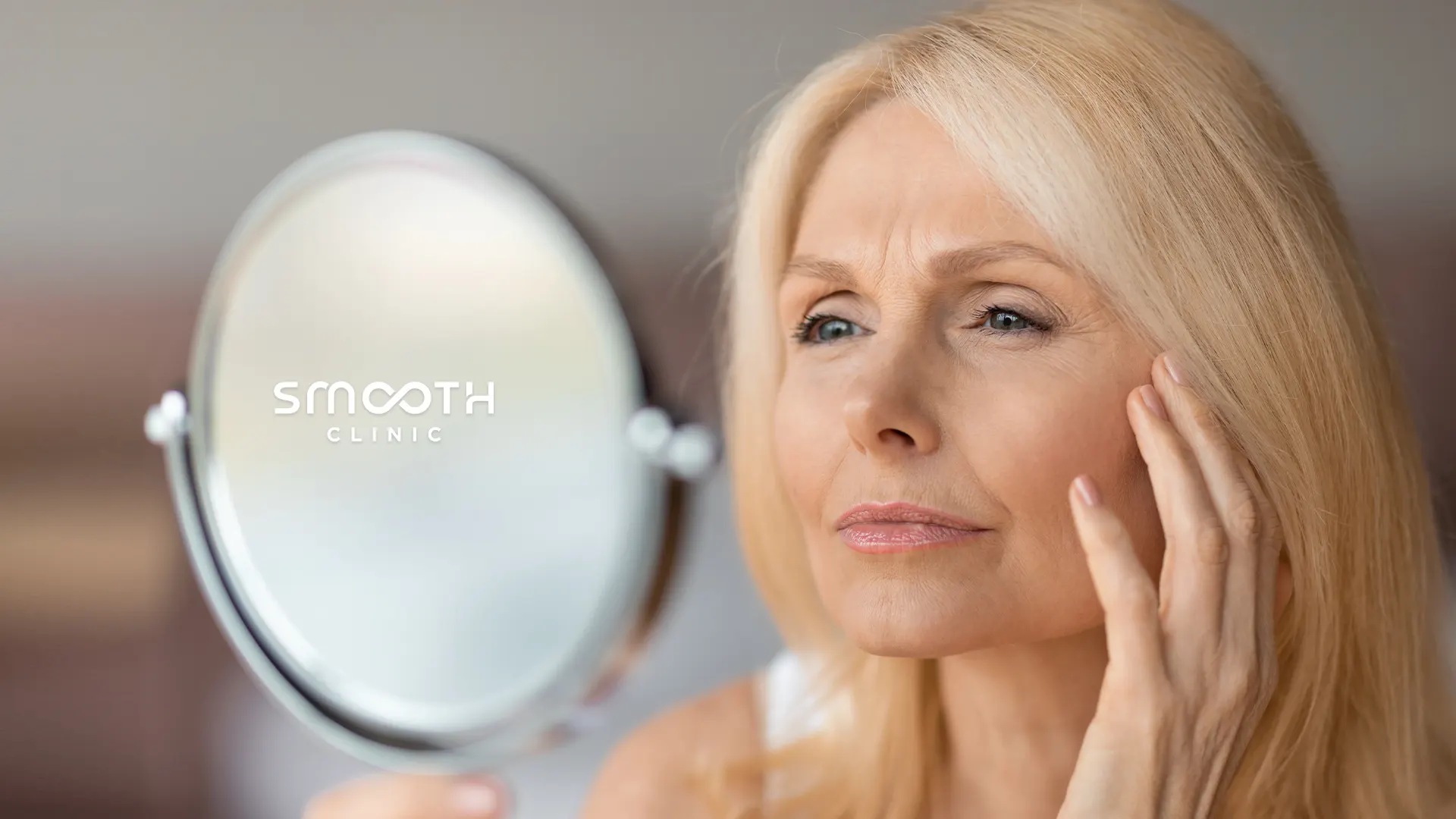
What does Botox do for wrinkles?
Botulinum toxin type A temporarily reduces activity in selected facial muscles, softening lines caused by expressions. BOTOX is one brand of this prescription medicine; other products have their own indications and dosing requirements.
Wrinkles also reflect aging, sun exposure, smoking and changes in skin structure. The key is to assess your face both at rest and while smiling, frowning or raising your eyebrows.
- Dynamic wrinkles: lines that become more obvious with movement, such as frown lines and crow’s feet. These are the main target of wrinkle treatment with botulinum toxin.
- Static wrinkles: lines visible when the face is relaxed. Some mild resting lines may soften, but deeply etched creases may remain. Botox does not replace lost facial volume or remove excess skin.
Which facial lines can it treat?
- Forehead lines: horizontal creases that appear when you raise your eyebrows. Brow position and existing eyelid heaviness need assessment.
- Frown lines: vertical lines between the eyebrows, also called glabellar lines.
- Crow’s feet: lines at the outer corners of the eyes when smiling. Treatment does not correct under-eye bags or hollowing.
Nose creases and lines around the mouth need separate assessment. Treatment near the mouth can affect smiling or speech, and deep nose-to-mouth folds are not automatically a Botox problem. Approved uses depend on the exact product and country; a doctor should explain any off-label use, its risks and alternatives.
Jaw-muscle reduction, jawline lifting and treatment of neck bands have different goals from upper-face wrinkle treatment.
Who is it suitable for, and when should you start?
It may suit adults bothered by expression lines who are comfortable with a temporary result. There is no age at which everyone needs to start. The decision depends on the lines, your health, the product’s indications and the result you want.
Treatment is individualized for men and women. Muscle strength, facial structure and the amount of expression you want to retain matter more than a fixed male-versus-female formula.
Can “preventive Botox” stop wrinkles developing?
Reducing repeated muscle folding may help some lines, but long-term evidence does not justify promising permanent prevention or recommending treatment to everyone in their 20s. “Baby Botox” is not a guarantee of fewer side effects or a natural-looking result.
Daily sun protection and not smoking remain important. Botox does not prevent every cause of skin aging, and choosing not to have treatment is reasonable if the lines do not bother you.
How soon does it work, and how long does it last?
Many people notice changes within 3–7 days. Results develop gradually rather than appearing immediately. The effect commonly lasts around 3–4 months, sometimes longer, depending on the product, treatment area and individual response.
Agree on a review appointment before deciding whether more treatment is needed. Do not rush into a top-up because there is little change on the first day. Repeat-treatment timing should follow the product guidance and your doctor’s assessment.
A disappointing result does not automatically mean resistance. See why Botox may seem less effective for the factors that need review.
How should you choose a product and treatment plan?
Choose a traceable product and an appropriate treatment plan rather than relying on “premium” or “high-purity” claims. No brand can promise the longest-lasting or most natural result for everyone.
For the products named in this page’s original price table, the Thai FDA records distinguish their wrinkle indications:
- BOTOX, 100-unit vial, registration 1C 21/55 (NB): includes temporary improvement of forehead lines, frown lines and crow’s feet in adults. The Allergan Botox guide covers this product in more detail.
- Neuronox, 100-unit vial, registration 1C 1/66 (BF): lists moderate to very severe glabellar wrinkles among its indications. This should not be read as approval for every facial area.
These records concern specific registered products and pack sizes. They do not confirm current clinic stock, authenticate an individual vial or establish approval for another brand. A U.S. label is not a substitute for Thai registration information.
Units are product-specific and cannot be directly compared or converted between brands. Your doctor should choose the amount after assessment; a package quantity is not a personal dose recommendation.
Use a licensed medical clinic and a qualified doctor. Ask to see the product name, Thai registration number, batch number and expiry date, and how its source is verified. A registration number or QR code alone does not prove that a vial is genuine.
How much does wrinkle Botox cost?
Smooth Clinic’s original English article listed the following approximate prices:
| Brand | Listed quantity | Approximate price (THB) |
|---|---|---|
| Allergan | 50 Units | ฿13,500 |
| Allergan | 100 Units | ฿19,500 |
| Neuronox | 50 Units | ฿5,999 |
| Neuronox | 100 Units | ฿9,999 |
These are previously published prices. Confirm current pricing, product availability, conditions, treatment areas and what is included before booking. The quantities preserve the original price terms; they do not specify the amount everyone needs or the size of the vial used.
What should you discuss before treatment?
- Allergies or infection: treatment should not proceed with an allergy to the medicine or its ingredients, or infection at the intended treatment site.
- Health conditions: disclose nerve or muscle disorders, swallowing or breathing problems, and existing drooping eyelids.
- Pregnancy or breastfeeding: discuss postponing elective cosmetic treatment because safety information is limited.
- Medicines and supplements: some antibiotics and muscle relaxants can interact with treatment. Blood thinners and some other medicines may increase bruising. Do not stop prescribed medication yourself.
- Previous procedures: tell the doctor about earlier toxin treatments, including the product and date, and any facial surgery or other cosmetic treatment.
What are the side effects and warning signs?
Possible effects include soreness, redness, swelling, bruising and headache. Drooping brows or eyelids, an uneven smile, unwanted stiffness or weakness in nearby muscles can occur, even with a genuine product. Careful assessment and technique reduce risk but cannot guarantee a particular expression or a complication-free result.
Contact the treating doctor if you develop eyelid drooping, difficulty smiling, or worsening redness, swelling or pain.
Seek urgent medical help for trouble breathing, swallowing or speaking, double vision or widespread weakness. Serious effects can begin hours to weeks after treatment. Facial or throat swelling with breathing difficulty or faintness may indicate a severe allergic reaction. Do not wait for a routine follow-up.
Does it hurt, and what should you do afterwards?
The injections can sting; discuss comfort measures with your doctor. Many people resume everyday activities soon afterwards, but visible swelling or bruising can occur, so leave time before an important event.
- Avoid rubbing or massaging the treated areas. If applying makeup, avoid pressure or vigorous rubbing.
- Follow your doctor’s instructions about strenuous exercise, heat, alcohol and other facial procedures.
- Monitor for the warning signs above and attend the agreed review.
When might filler, laser or another approach be more suitable?
The cause of a line matters more than its depth alone. A doctor may discuss:
- Dermal filler for selected folds or areas of lost volume. Risks include lumps and, rarely, blocked blood vessels that can cause tissue damage or blindness. It is not the automatic answer to every deep wrinkle.
- Laser resurfacing for some fine lines and sun-damaged texture. Results and recovery vary by device; risks include pigment changes, burns and scarring.
- Skin-tightening treatments when looseness is the main concern. Ultrasound and radiofrequency are different technologies from lasers, and their results do not equal a surgical facelift.
A combined plan may help selected concerns, but more procedures are not always necessary. Start with the lines that bother you most, the improvement you can realistically expect and the risks you are willing to accept.
To discuss wrinkle treatment in Thailand or check the latest quote, contact Smooth Clinic. Ask which product is proposed, why it suits your concern and how follow-up is arranged.
References
- Thai FDA: BOTOX 100 units, 1C 21/55 (NB); Neuronox 100 units, 1C 1/66 (BF).
- AbbVie: BOTOX Cosmetic U.S. prescribing information. Safety reference; not a statement of Thai indications.
- American Academy of Dermatology: treatment overview, preparation and aftercare and FAQs.
- Carruthers A, et al. OnabotulinumtoxinA treatment of mild glabellar lines in repose. Dermatologic Surgery. 2010.
- Binder WJ. Long-term effects on facial lines: a comparison in identical twins. 2006. A report involving one twin pair.
- U.S. FDA: dermal filler benefits and risks.
- American Society of Plastic Surgeons: skin resurfacing risks.
- American Academy of Dermatology: skin-tightening options and reducing premature skin aging.